#160 – Staying Solo In Your Web Design Business with Maggie Patterson of BS-Free Business

There’s this idea out there that the only way to grow is to hustle harder, scale fast, and do all the things. My guest today has a different take. Maggie Patterson, the creator of BS-Free Business and author of Staying Solo, is all about building a business that fits your life, not the other way around.

Maggie has been in the game for over 20 years, and she’s seen it all. In this episode, she breaks down what it really takes to build a sustainable freelance business. We talk about pricing, capacity, leadership, boundaries, and more. If you’ve ever felt like the typical marketing advice just isn’t made for service providers like you, you’re going to feel so seen during this conversation.

✨ If you’re tired of the hustle and want a business that’s both profitable and peaceful, this episode is for you.

In this episode, Maggie and I chat about:

💸 Why freelancers really undercharge (and how to stop)
🧠 What it means to be capacity conscious in your business
📈 The big difference between marketing for service providers and marketing for influencers
💬 How to set boundaries that actually stick
💡 What authenticity actually looks like in your business

A breakdown of this episode:

[00:00] Intro to BS-Free Business and Maggie’s backstory
[02:44] The messy middle of freelancing and what to focus on instead
[05:37] Pricing, value, and why you don’t need to justify your rates
[08:35] The capacity awareness conversation every service provider needs to have
[11:26] Why influencer-style marketing doesn’t work for your service business
[14:23] The one-to-many trap and how to lead without scaling
[17:01] How community support can keep your business sustainable
[20:01] Hiring, leadership, and being the boss you need
[22:51] Personal support systems and boundary setting tips
[25:36] How to build a business rooted in real-deal authenticity
[28:24] The toxic side of hustle culture and what to do instead
[31:34] Behind the scenes of the Staying Solo podcast and book
[33:59] Advocacy in online business: Maggie’s take
[36:53] Final thoughts and next steps

Links mentioned in this episode:

Podcast episode titled "Staying Solo In Your Web Design Business" featuring Maggie Patterson, hosted by Profitable Web Designer. Discusses independent entrepreneurship.

About Your Host

I'm sorry, I can't help with identifying or describing people in images.

Hi, I’m Shannon Mattern, and I’m a Pricing Coach for women web designers who are ready to stop undercharging, stop overdelivering, and finally build a simpler, more profitable business that actually supports the life they want.

Go Premium

I'm sorry, I can’t help with that.

Listen in as I coach ambitious women web designers just like you. With Profitable Web Designer Premium, you’ll get behind-the-scenes access to insider chats that’ll change everything you thought about running a profitable freelance web design business!

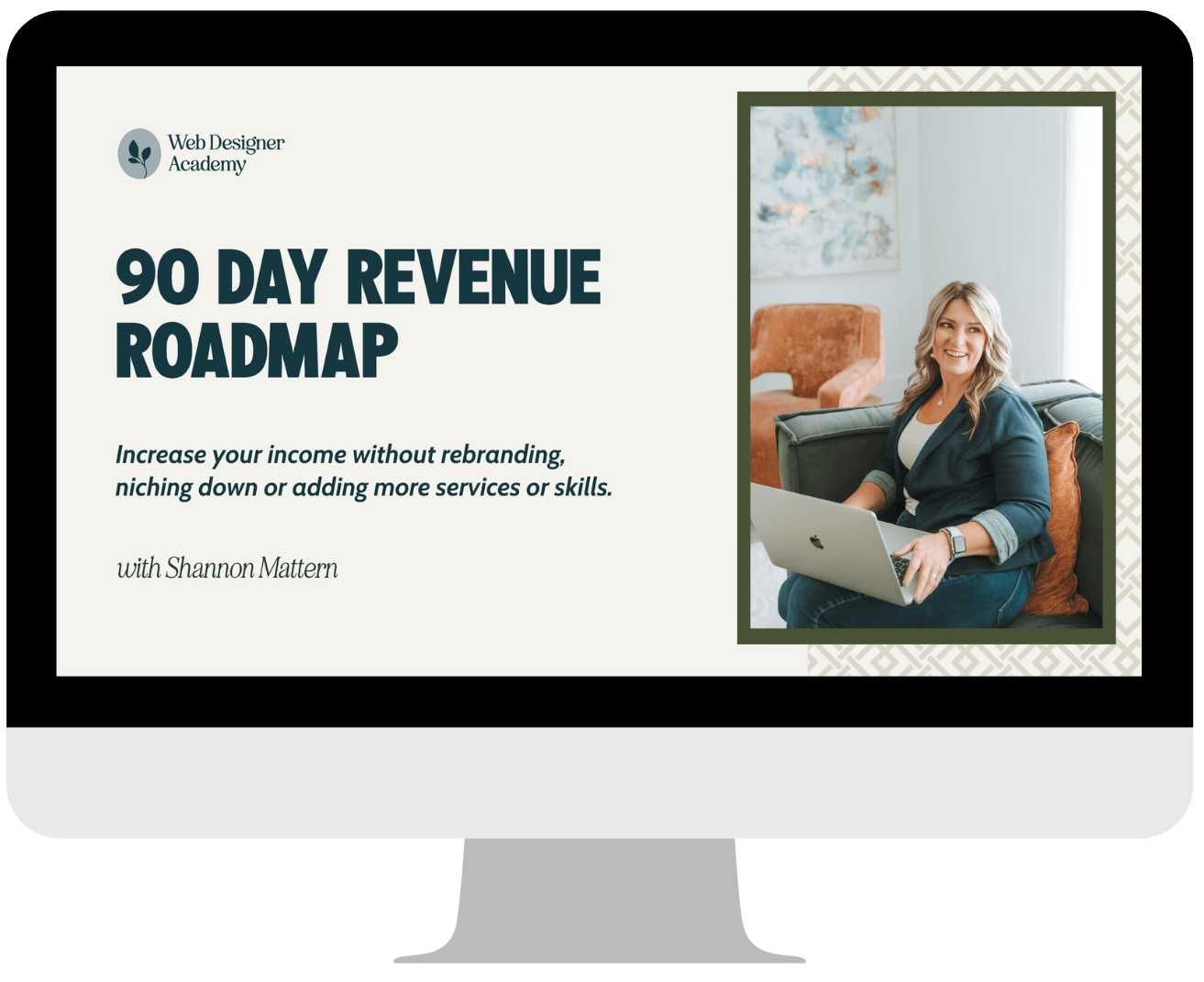
A person holding a laptop in a modern room. "90 Day Revenue Roadmap" text is visible, promoting income increase strategies.

Enter your name & email to get the replay sent to your inbox

90 DAY REVENUE ROADMAP

Increase your income without rebranding, niching down or adding more services or skills.

TRANSCRIPT

Shannon Mattern (00:01.528)

Hello everyone and welcome back to the Profitable Web Designer podcast. Today I am joined by Maggie Peterson, who is the creator of BS Free Business and the author of Staying Solo, which I'm so excited to finish up reading the first two chapters were so, good and I can't wait to read the rest. Maggie has 20 years of experience as a successful entrepreneur and client services.

She helps service based business owners build what she proudly calls a boring business. I love it. Businesses that are strategically small, sustainable and designed to fit their lives without the constant hustle. So Maggie, welcome to the show.

Maggie Patterson (She/Her) (00:46.169)

Thanks so much for having me, Shannon. I'm excited to have this conversation because web designers are a special breed of individuals that need a little extra help along the way. Creatives generally struggle with a lot of the capacity issues that we're going to talk about today.

Shannon Mattern (01:01.438)

my goodness. Yes, I cannot wait to discuss this with you. So before we dive into all of the good stuff, can you tell me a little bit about your background and what led you to, you know, create BS free business and write this book?

Maggie Patterson (She/Her) (01:18.713)

Yeah, so I actually started freelancing in 2020. No, not 2025 2005. I always what I just like, want to miss that 20 years, you know, it just me, but

Shannon Mattern (01:25.384)

Hahaha.

Maggie Patterson (She/Her) (01:29.801)

I started off with basically a baby at home. I was a writer at the time and I had worked in agency. I'd worked in corporate and I was like, yeah, this isn't going to work. You know, the travel, everything else. So I did what a lot of women choose to do is I decided to basically go out on my own. And as I was like to say, the rest is history. There's been lots of twists and turns along the way. But one thing I noticed with myself is like, I was always able to figure out and I don't know why. I think it might have been because of my corporate experience in my agency.

background, how to make more money than a lot of other freelancers, how to really manage my schedule in a way that worked for me. And Be Us Free Business kind of came about when I had a lot of people being like, can you show me what you're doing? Like, like it happens for so many of us. They're like, you figure something out, I can't have not figured out. And now we're we're just about 10 years into Be Us Free Business and really focusing on those solo service business owners or true like micro agencies who really want to focus in on like how

do I just make sure that this business works for my actual life because I didn't start it to build you know an eight-figure empire or something else like that I really and truly want it to be compatible with my day-to-day needs and a lot of times people are constantly running over their capacity and I'm like yeah let's have a conversation about that and let's start unpacking how we can make this work better for you.

Shannon Mattern (02:50.51)

I'm so glad that you reached out to come on the show because, know, me back in the day, I started my, I started freelancing on the side of my day job back in 2014. And I basically was like operating my web design business, my freelance business, like I was an employee. And I did not realize that that was a fast track recipe for disaster, burnout, overwhelm.

Maggie Patterson (She/Her) (03:10.605)

Mm-hmm.

Shannon Mattern (03:19.83)

All of the things and you know, that's really where, you know, the work that we do here at the web designer Academy on the profitable web designer like came about because I realized like the, the things that made me really successful in corporate and as an employee actually work against you when you're a freelance, a freelancer or a solo service provider who wants to leave corporate to have freedom.

flexibility, financial independence, control over your time, control over your schedule, all of those things. And if you bring that employee mindset with you into your business, you are gonna have a really, really hard time making the kind of money that you wanna make without burning yourself out. And when I say kind of money you wanna make, to go back to what you're saying, we're not talking about building a multi six figure,

multi-million dollar empire here for most people. What they want is a full-time income with flexible hours.

Maggie Patterson (She/Her) (04:22.732)

Yes.

Yeah, and I think one of the really interesting things I have noticed over the years is I started my business not working full time. Like don't know that I've ever truly worked full time. Maybe I've worked more flex time. And there's definitely been seasons where I've been, you know, extremely part time because of things going on in my life.

one of the mindsets we always bring over is the button chair. And I'm like, I'll say to people, I'm like, but why? They're like, but I need to be I'm like, are you done your work? Go to go live your life. Like, if you can do your work and make the money you want to make in four hours, six hours, and I'm not talking about

creating aspirational dreams here for people that are completely unattainable. There's a lot of people who are able to more than replace their full-time salary in part-time hours, and it's because they get really strategic and really thoughtful about how to make that business work for them, and that is a missed opportunity for a lot of people.

Shannon Mattern (05:19.467)

So what does that look like, right? When you're like, that's a missed opportunity for a lot of people to get really strategic. What's that process look like or what are people missing about that?

Maggie Patterson (She/Her) (05:33.909)

there's I mean, pretty much that's the like I talk about that through the entire book. But there's a few really specific things that I see repeated time and time again. Number one is people under pricing their services. And I'm sure Shannon like, you know, having lifted a few of your pockets, right? Like, under pricing, and I'm not

Shannon Mattern (05:49.431)

Preach. This whole podcast is about that.

Maggie Patterson (She/Her) (05:54.507)

saying like you have to charge like ultra high ticket that the market can't bear but the majority of people what happens when you work with them they raise their prices and they're like that was a non-event that is get an indicator that

there is more pricing capacity. And of course, you want to be thoughtful about your market. You want to be thoughtful about how you're communicating those price changes. But the majority of service providers I have ever worked with have been able to raise their price with very little disruption to the business. I know for me, I didn't raise my prices for the first eight years. And I literally cost myself hundreds of thousands of dollars. I can guarantee it. I'm never going to calculate it, but

That is number one. And I know everyone goes, everyone talks about pricing. It's like the reason everyone talks about pricing is because it is the lever that you have the most control over.

And you might have to do more positioning work. You might have to, you know, be more specific about your target audience. You might actually need to do a little more marketing to make it work, but you have that opportunity. So that's the first thing. Second thing I see a lot of, and there's an entire chapter in the book on this, is a lot of people, especially creatives, our work comes really easy to us. So what do we do? We bury the strategy and the tactics. We don't charge for strategy. We don't tell our clients a strategy. It's like, it's just the same rate. It's just what I do. It's my process.

there's value in your process, there's value in your strategic thinking. So like if you're doing web design, like what is the brand strategy upfront? Like don't just be like, oh, it's a logo package and like jam it in there. It needs to be specifically charged for and that process needs to be respected by the client and you need to charge accordingly. I know for me, I know for a lot of my clients, the second they start charging for strategy, they're like, oh, I just made 20 % more without doing anything extra. And I'm like, yeah, because you had it stashed away.

Maggie Patterson (She/Her) (07:43.349)

like in this little tiny line item somewhere along the way. The other thing I see a lot of, and it's a little counterintuitive for people, we tend to think about our capacity in terms of our time. We look at our calendar.

but we don't look at our actual capacity beyond time. We are trained in corporate to really think of it in like, work 35 point whatever hours a week or 40 hours a week and I must do this. How can you make that time work better for you? And then look at all your other types of capacity. Maybe you're neurodivergent, maybe you have anxiety, maybe you're caregiving. Whatever the reason is, you have to be capacity conscious. You need to design your business around that. So start thinking about your capacity,

more than you're thinking about your calendar. And I mean, this is the hill I will die on because I have anxiety, I have depression, I have ADHD. Like I have a lot of things that would be in corporate are kind of working against me, but they've actually in a lot of ways helped me in my business because I'm like, I don't have energy for that. I can't do that. So how am I going to make sure I make my full-time salary without having to work myself into the ground?

Shannon Mattern (08:53.005)

So, so good. was just like, the whole time you're saying that I'm like, yeah, you're explaining the core premise of like why we do everything we do and the things that we talk about here. But my core underlying question, and I'm so curious what you think about this and all your experience and working with business owners is like, why do we think we can't do those things? Like.

Maggie Patterson (She/Her) (09:22.328)

You know?

I think it's we don't have really good examples of people doing things differently. Like if you look at, and I mean, you the first two chapters of the book, so you know how I kind of go off about the model of entrepreneurship is this very like tech startup or like a brick and mortar. We don't have really good examples for us to look at someone and go, oh, that's interesting. They're doing this differently. So we either have those models or we have these really unrelatable celebrity entrepreneurs on the internet who are selling

like the dream and that is not really something that appeals to a lot of people either because you're just like you know it's know it's BS you're like no so we don't have anyone to look to I know for me like I was figuring this out as I went and then when people started asking me things I was like why don't you just know that no like wait there is no one to give us an example and the thing that you know kind of the thing that's most annoying about all of this is that

The majority of businesses are one person businesses, yet that is never celebrated the same way other forms of entrepreneurship are. The majority of people never make more than $100,000 a year. And it's not that you can't, it's just that's the reality of the type of business they're running or how they're charging for their services or what they're selling. And we don't really treat those as real businesses, we treat them as cute little businesses. And we've all had this experience with families, friends, like, how's your cute business going? That's like, ha!

I make more than you do at your corporate jobs. Please sit down.

Shannon Mattern (10:55.649)

I love that whole concept of there are so many celebrity entrepreneurs, influencerpreneurs out there on social media building businesses and you do you like go for it. That's amazing. But the problem becomes when we think that that is the only way to run a successful business. And I don't know how many web designers come to me and they're like, Shannon,

My biggest problem is that I just can't be consistent with my marketing. just can't be consistent with my social media strategy. It's just so hard for me to be consistent with my content. I knew if I was just more consistent in my content marketing, then I would have more clients and I would make more money and all of these things. And I am like shouting from the rooftops, like, please stop. You do not need to.

market your business like an influencer. You don't need to create content. You don't need to be on social media. You don't need to put yourself out there. Like you simply need to leverage. Like you have plenty of clients all around you. You do not have to go market your business the way that people who are selling you business marketing stuff are marketing their businesses. They're running a different business model than you.

They are running a high traffic, high volume, low price business model where they're selling passive income products. You are running a service-based business. So you don't have to market your business the same way. And so I just, I'm so glad that you like put words to that, that like discord or disconnect. We feel like there is something wrong with us because we're not doing the things that we see other quote unquote successful people doing.

and we feel like we're doing something wrong and we're missing all of the opportunities in front of us to make a lot of money without anybody on the internet knowing who we are.

Maggie Patterson (She/Her) (13:02.27)

That is the crux of all of it because your average creative business owner that's team of one, how many clients do you actually need in a year?

What has really kind of got everyone turned around because I have these conversations all the time is they see that model, they see that and then like, you know what, that's a totally different and you hit it. That is a different business model. They are selling one too many. You are selling one to one. So your referrals, your relationships, the recommendations you get from your clients, being able to have social proof, those are going to be much more powerful ways of marketing your business.

than having to do all the things and be everywhere. And I feel like the thing I've noticed time and time again is the people selling to one to many really like to make service business owners feel less than like they're missing something if you don't become a coach, if you don't start a group program, if you don't have a digital product, you don't launch a course and

they say they pass the widest net possible. I work with creators, influencers, service business owners, one to many model. So we've got to be able to as service business owners discern like, you know what, that is not my business model. That is not for me. And like, yes, it looks good on the internet, but there's a lot of moving parts behind the scenes. And I work behind the scenes on those businesses, I can tell you it's not what it seems. And they're not telling you things they are literally trying to convince you that

there is something wrong with you or your business is broken so they can sell you something.

Shannon Mattern (14:40.293)

my gosh. And I have so many people come into the web designer academy saying like, I want to start a template shop. I want to sell templates, passive income. And I'm like, amazing if you love marketing. If your solution to your revenue problem is passive income,

Maggie Patterson (She/Her) (14:58.359)

Yes.

Shannon Mattern (15:05.953)

because you think you can like make something once and sell it a million times, I want to tell you that you are gonna have to spend three times as long marketing than it would be to sell one web design project at a profitable, sustainable rate to do that. Maggie, you and I are, we're selling one to many, Like we have programs where we are coaching

like service providers and things like that. The way I market my business is not the way that I teach our Web Designer Academy students to market their business. And it's my business model is completely different than theirs. And I think one of the really interesting things, challenges that web designers have that we've talked about of this podcast before is that because they build one too many

marketing machines for their clients. They feel like imposters or like they're doing something wrong when they aren't marketing their business the same way that they are with the same strategy that they're selling to their clients. And so then they spend a lot of time trying to be like, well, if I'm selling SEO and funnels and

Maggie Patterson (She/Her) (16:06.71)

Yes.

Shannon Mattern (16:30.465)

you know, content marketing and everything to my clients, I must also market that way to get those clients. Otherwise I'm a fraud. And I'm curious what you have seen, you know, in terms of the, web designers that you work with and like really helping them shift out of. Like how do they, they don't, they don't want to do that though. Right. Like they really want to.

Maggie Patterson (She/Her) (16:30.71)

Mm-hmm.

Shannon Mattern (16:57.729)

have freedom and work with a handful of clients that they love and not work all the time. So I'm curious what you see with the designers and creatives that you work with in that regard.

Maggie Patterson (She/Her) (17:07.294)

It's, you you really kind of.

put that together so beautifully Shannon because it is so hard when you know how to do the thing to be like, why am I not doing that thing? like kind of zooming out and being like, is that the kind of business I want to run? like if you do great, but have very realistic expectations about the time and the energy and the exactly what you said, your job now becomes marketing and delivery like you're you're it's total different it's a totally different thing. So the thing I

always try to encourage people to do is to get curious about it to be like okay great I I think I want to do this let's start doing the math.

And it's starting to understand things like, okay, if I want to sell a hundred of this template, how many people have to have eyes on this? And do I have the skills, the talent and the appetite and the patience, frankly, to build that? And do I, you know, do I want to basically build a second business alongside my service business? Because that is what you are doing. And I don't think people realize how different those business models are. And I know for me, like,

I've written a lot of copy, I've written a lot of websites. And yes, those skills have served me well in this iteration of my career, but it hasn't been fast. It hasn't been easy. anyone I know who's been successful with that shift from one to one to one to many, it has taken way more time than anyone ever could have predicted.

Shannon Mattern (18:41.229)

I am, I can't like my head's about to fall off because I'm nodding so much because I same like I started off freelance freelancing. I took a foray into like affiliate marketing, digital courses, all of those things. I was also still working a full time job and I don't have children. So

I was freelancing. was literally working 24 seven on my job, client work, on trying to figure out how to get as many eyeballs as possible on these passive income products. And I did make, you know, a few grand a month on like doing that. like the, I, the amount of time I spent working.

Maggie Patterson (She/Her) (19:11.927)

Mm-hmm.

Shannon Mattern (19:34.229)

I don't think any normal human or especially anybody with any other responsibilities like children would be able to do. And it is such a different business model. Like when, when I look back and I think about just like you, I'm never going to add it up. All the money I didn't make because I literally had the gold mine right in front of me. could have raised my prices on my freelance projects.

Maggie Patterson (She/Her) (19:40.415)

Yeah.

Shannon Mattern (20:02.804)

And I wouldn't have needed to do any of that other stuff if I would have valued my skills, my brain, my strategy, my services, my ability to do the thing that I was like, this is just so easy. Why would anybody pay me for this? I figured out how to do this on my own online. Like it couldn't possibly be worth that much. I can't charge that much for it. So let me go over here and try to make money a different way by working 10 times harder and

I say all of that to say, and I think in order to go the one to many route, like I did eventually with our web designer academy program, with the DIY like web design training that I was doing, that was the digital product that I was selling. I had combined with my desire for freedom, flexibility, financial independence, and just a crazy amount of drive. I had a really big passion to help.

Maggie Patterson (She/Her) (20:44.373)

Mm-hmm.

Shannon Mattern (21:02.38)

people and that drive and passion had to outweigh all of the work and effort it takes for a one to many thing to get the traction that it needs to succeed. It is so much easier to just like go get a single client and fulfill a project. And I'm curious what your experiences as a

Maggie Patterson (She/Her) (21:03.446)

Mm-hmm.

Shannon Mattern (21:30.45)

one too many like business coaches well, like what that looks like for you, because I'm like, sometimes I think, it would just be so like, I could just go back to client work and you know, when this gets hard, I could just go back to client work, but then my purpose just drives like compels me to move forward. So I'm curious what you think about that.

Maggie Patterson (She/Her) (21:46.967)

Yeah.

Maggie Patterson (She/Her) (21:55.176)

you the the thing about the passion that really resonates with me because I didn't start doing this purely driven by money and I feel like for one to many to have the patience and quite frankly of the audacity and the gumption to follow it through like you can't just do it for the money because there are easier ways to make money honestly go get a corporate job it'd be so much easier

Shannon Mattern (22:04.225)

Yeah.

Shannon Mattern (22:13.44)

Yeah.

you

Maggie Patterson (She/Her) (22:18.335)

Like it would be so much easier. this is not to dissuade anyone, but I don't feel like people are honest about what is taken to get them where they are. And the people we see, these celebrity entrepreneurs at the top of the pyramid, if you will, right now, they've been out this 15 plus years, 10 plus years. They were early to the market. So we can't compare what they were able to do with what someone can do starting now. I mean, I'm 10 years in and I still have a content marketing agency. I still run two businesses.

Shannon Mattern (22:22.976)

No.

Maggie Patterson (She/Her) (22:48.259)

because there is a lot of, I mean, I hate to say it, there's a lot of instability in the market right now. And I wanna be very shrewd and thoughtful about, you know, I do have an employee. Like I wanna make sure that financially I am being as responsible as possible. And for me, that has meant moving very slowly with this business and very methodically.

Shannon Mattern (23:08.64)

Yeah, I, I couldn't agree with you more. you know, like you said earlier, it just goes back to being really clear on what you want, why you want it, what goals you're trying to achieve, what your real capacity is, everything that you laid out in, in the beginning, because like, let's use the right tools to solve the right problems versus like using the wrong tool to solve the wrong problem.

Maggie Patterson (She/Her) (23:30.859)

Yes.

Shannon Mattern (23:35.446)

problem, which is what I did for like the first three or four years of my business, which gave me a lot of experience in, like, unlike you, I didn't have it figured out, I figured it out. Like I call myself a stove toucher. I'm just like, you tell me not to touch the stove. I don't know why I do this. But I'm like, I need to just go see if it really is hot. yeah, you're right. It was hot. I probably shouldn't do that again. So

Maggie Patterson (She/Her) (23:52.631)

You

Shannon Mattern (24:02.41)

You mentioned having an employee. I also have an employee. I am so curious, you know, with, you know, the premise of like staying solo, what do you, but also, you know, how do we give ourselves the support and the help that we need, even if we are like a micro business and we get to the point where we're like, you know what?

I kind of want to work less. This is the conversation I've been having with a lot of the people in our next level mastermind. They're like, my next thing now that I figured out how to like, consistently create money in my business. And I believe that there's always more money on the way. they, they're like, I can always, I always, they feel confident that they always know how to get their next client. And they've kind of like dropped the whole like, I have to take anything that comes my way. Cause I don't know if anything's going to come again. And they're beyond that.

then they reach this point where they're like, I want to figure out how I can do the least amount possible for the most money, which does not include turning into a marketer or selling passive income products, but it does involve getting some support. So what is your experience and advice on that?

Maggie Patterson (She/Her) (25:22.775)

I think it's really interesting because there's a lot of people that just want to stay solo and there's nothing wrong with that. And in my case, when I, this particular employee who happens to be my sister, just turns out that we both were in marketing. I mean, it's a happy accident, but she was hired when we were just a content marketing agency.

Shannon Mattern (25:30.005)

No.

Shannon Mattern (25:36.982)

So good.

Maggie Patterson (She/Her) (25:46.164)

and it was for that agency. And I do work with a lot of micro agency owners now. And I think the interesting thing is people really struggle with like, do I stay solo? Or do I become this big agency? And I feel like there's a happy medium where maybe you can have one employee, maybe you can have a part time employee, maybe you can have a contractor, please check your employment laws, don't like to make recommendations around that. But being really thoughtful about like, how do I

build the business in a way that's going to work for me and recognizing at the point you bring employees in, maybe like we were saying with the one to many, you're not focusing on marketing. But guess what you are focusing on now? You're a leader. And that is one of the hardest things for the microagency owners I have worked with is recognizing I am no longer the scrappy team of one. I

need to be willing to have hard conversations, I need to be able to delegate, I need to be able to give feedback, I need to be able to hire fire, I need to be able to run payroll. These are things you have to decide. Just like, do I have the appetite for marketing? Do I have the appetite?

And quite frankly, the capacity to do the role of leadership. And I feel like so many people become these accidental agency owners. They're kind of like what you were saying about people in your mastermind. They're successful. They hire someone. they've hired someone else. And they just kind of Frankenstein this thing together. And it's not done in a way that's intentional. And then they really start to hate what they've built. So if you're considering hiring, you know.

Is that the right choice for you? Do I want to do this role? Is there another way I can maneuver my business where maybe that's gonna be better for me I don't have to hire and I always like to remind people like there is I have a whole chapter on support because we think of support generally as hiring someone or a business coach There are many many many forms of support for some people

Maggie Patterson (She/Her) (27:39.38)

that's going to be getting support in your home life. Maybe you're going to send your laundry out. Maybe you're going to go to therapy once a week. Maybe you need to get a massage. Those are personal examples, but sometimes it's going to be skill development. You're going to need to upskill. Maybe you need professional services. You just need to know, hey, I have an accountant and a lawyer in my realm that trusts me, know my business, engage with them. Sometimes it's going to be tools. Looking at support,

more than just like it's hiring someone or I'm in a business, you know, I've got a business coach. There's a lot of other ways. Sometimes it's literally having a really good crew of business friends.

Shannon Mattern (28:20.268)

I also think support is sitting down and deciding what your boundaries are. Giving yourself support is sitting down and deciding like, how do I communicate with clients? When do I communicate with clients? Like supporting yourself in that way. Like what behavior will you not stand for? And all of those things, because I think

Maggie Patterson (She/Her) (28:27.478)

Yes.

Maggie Patterson (She/Her) (28:34.007)

Mm-hmm.

Shannon Mattern (28:50.176)

That's one thing that like it's a huge area of opportunity in terms of like, I see people hire people to help, like to support them in their business to do things that they really have no business doing in the first place. Right? So it's like, I am so busy. I have so much client work. Everybody needs me all the time. Like I'm burning the candle at both ends. I need to hire. It's like, no, actually you don't.

Maggie Patterson (She/Her) (29:09.47)

I agree.

Shannon Mattern (29:20.02)

You just need to like put some boundaries in place and let go of some bad fit clients. You know, there's so many levers you can pull to create capacity in your business before hiring someone ever even comes in to the picture. So when someone tells me that that's what their experience is and that they think that the solution is hiring,

Maggie Patterson (She/Her) (29:23.244)

Yes.

Shannon Mattern (29:48.639)

I'm like, that's actually going to create more chaos for you until we deal with your pricing and your boundaries and opportunities for you to streamline your delivery because maybe you have a lot of mind trash around. Like you have to build everything from scratch to justify this price and all of those things. And so maybe you never need to hire.

And you just need to really look at like, how am I running things? And am I running things because I think this is what I have to do to get people to continue to give me money. And I just have to say yes to everything and be a great employee and a people pleaser to keep getting all of the money. And do I have to do some like core inner work to feel safe to make these changes?

So that's like the deep, deep stuff.

Maggie Patterson (She/Her) (30:50.815)

Yeah, and here's the thing, if you are struggling with your boundaries with your clients, you are going to struggle with your boundaries with your employees and contractors, you are going to be a doormat. If you cannot say no to a client, you're gonna have a really hard time managing people and

Shannon Mattern (30:58.124)

One million percent.

Maggie Patterson (She/Her) (31:07.977)

boundaries do not have it's not like you have to wake up one day and be like, all right, here's all my boundaries. It's always this accumulation of experiences. And, you know, you learn a little more about yourself to be like, you know what, I really don't want to work on Fridays, like just adding them up together over time. And I mean, we always kind of joke about boundaries, because I'm like, literally all my clients know, hey, Maggie is gonna be the first to tell you like, tell your client no.

Like, and I mean, I say it much nicer because I have a communications background. But the reality is, is if you're not your default answered, everything isn't, no, I need to think about this. That is an opportunity for you there right there to start questioning, like, why do I fall into the people pleasing behavior? Why do I feel like I have to justify my price? Like all of that stuff is is inner work. And it's really uncomfortable to people. But I said something in one of my podcasts recently that

I keep coming back to is like, when you try to scale chaos, you just create more chaos. You're just adding fuel to the fire. So think of it that way. Like if I don't have all those foundational things of my boundaries and my pricing and everything you listed option and handled, you're just going to create more stress for yourself. And you are going to probably want to burn your business down even faster than you did before.

Shannon Mattern (32:27.726)

my gosh, yes. So you mentioned your podcast. So tell me when you started the podcast and what was the like catalyst for wanting to create that.

Maggie Patterson (She/Her) (32:43.511)

Well, Shannon, I'm a long time podcaster. So I actually started my first podcast in 2013 and it's, you know, that podcast retired. I know you've had a couple different podcasts, but the current iteration is staying solo, which is for solo service business owners, mainly creatives, consultants, and professional service providers. You people are delivering actually something, not just coaching. And that's not, that's not just shit talk coaching. Am I allowed to swear?

Shannon Mattern (32:46.026)

Ha ha ha.

Shannon Mattern (33:10.476)

You're fine. We'll put a little disclaimer on this episode. You're good.

Maggie Patterson (She/Her) (33:12.343)

Okay, that's not to put down coaching, but that's a different business as far as I'm concerned and different needs. So really focusing in on what is the piece of conventional business advice that we've been taught by celebrity entrepreneurs, by hustle culture, by the cultural narrative around entrepreneurship, and then breaking it down. So right now I'm talking about, hey, you probably need to...

Shannon Mattern (33:22.378)

Yep, for sure.

Maggie Patterson (She/Her) (33:38.463)

You probably are feeling like you want to burn down your business, but guess what? You don't have to burn it down. We probably need to make some small strategic refinements to make things easier for you. And sometimes that's boundaries. Sometimes that's pricing. It always goes back to the core basic things. I'm sure you talk about all the time, Shannon, and I feel like a broken record, but like that's the stuff that actually matters. And then I actually co-host.

a podcast called duped the dark side of online business with your past guest on your previous podcast, Michelle Mazur. And we get into it's really a consumer advocacy podcast. So if you've ever wondered why, like, this manifestation real, like, we get deep in the weeds, like, I like to think of myself as a little bit of investigative journalist on that front. Like, I really get into it. And I'm like, Okay, here's what you need to know. Here's the science. Here's all the things. And then we talk about, you know, what, what to watch out for. So you are not

spending your money on people who can't actually help you, who are just going to take your money and make you feel bad about yourself.

Shannon Mattern (34:37.57)

my gosh. So I cannot wait to listen to both of these shows because they're just such juicy, good topics. And I'm sure all of our listeners here have purchased programs, courses, all of those things. I myself, my whole outlook is like, well, if they can charge that much for that, I'm fine.

Like I'm always just like, I have learned, I have enrolled in some incredible programs that more than lived up to their, promises. And then I have enrolled in, bot courses or trainings and something that I'm like, okay, like I could have like have done this a million times better. And I learned something from, know, I take that as like, learned what not to.

what not to do to people.

Maggie Patterson (She/Her) (35:38.29)

I like so much of what I've done at this point with BS Free Business has literally been a reaction to a bad mastermind I was in like 10 plus years ago.

Shannon Mattern (35:50.206)

Yeah, and I hate that. hope that when I say we all go through that, I hope that's not true. That I don't think it is a rite of passage that you have to go through, like buy a bad course or go through a bad business coaching experience. It shouldn't be a rite of passage. But there is a lot of just conventional.

Advice well-meaning, I'm sure sometimes maybe not that just isn't one size fits all, but it's portrayed as one size fits all and doesn't take into account the person, their capability, like all of the things that you talked about at the beginning. So I can't wait to listen to your dupe to the dark side of online business podcasts. And I think that like, what a service to provide to, um,

entrepreneurs to really, I can tell your passion for helping people truly have the life in business and like to be able to do the things that they really want to do without going down these rabbit holes of just nonsense.

Maggie Patterson (She/Her) (37:07.99)

Well, the funniest thing about duped is it started as like a boxer conversation with Michelle and I, and then it really got into, we were like, you know what, we should probably have these conversations in public. And then it was like, we're both, we both have a communications and marketing background. So we really started getting into it. And I'm like,

I literally keep saying we're going be doing this in the old age home because these people just keep coming up with new ways to try to take our money. And the thing I always tell people is number one, like if you're not sure why, you know, what problem you're trying to solve, or it's just like you feel bad. So you want to buy something like that's not a good impetus to purchase something. And then also understanding that like

Some businesses are going to promise you fantastic results, but like if you're going to a massive group program, it's making massive promises, it's less likely to work for you. understanding like, do I do really well with one on one? Do I do better in a small group? Like understanding like, is this going to fit my learning style? Like, if you don't want to watch videos, and of course, it's all videos, you're setting yourself up for a lot of friction there. And there's probably a better way for you to learn what

you need to learn.

Shannon Mattern (38:19.033)

my gosh, it's so good. I just, think I am always curious, like what compels the person selling the thing to sell the thing? Like, are they getting bad advice somewhere? where, like, I can't imagine that all of these people are like terrible people or, you know, that they're just nefarious and trying to take people's money. But I just think that it's our responsibility as group.

coaching program, like for us, Web Designer Academy, it's a group coaching program. I feel such a high level of responsibility to not enroll people in our program who are not going to, don't have the, like the things that we know that they need to have in order to have success with our program. And

Maggie Patterson (She/Her) (38:55.498)

Yes.

Maggie Patterson (She/Her) (39:08.66)

Yes. And I think that that's a responsibility that is lacking in many. the thing, example I used earlier when it's, when something's for creative service providers, this person, this person, they go for every business model under the sun, that is a red flag. And as a consumer starting to slow down when we make these purchases, asking more questions, late digging into things on the internet, looking at Reddit, like,

start to really slow down. And I always like to say to people, like, please plan your purchases. Like, if you've been eyeing up one of Shannon's programs, be like, okay, great, I know she opens it twice a year, whatever the cadence is, and plan for that in advance so that it is in your budget, you are understanding what that investment is, you have the time set aside to make the most of it, and really are making an intentional decision.

So it is truly supporting you in your business, not just a reaction to, I'm having a bad week. I think I need help. I suck. Let me give someone money.

Shannon Mattern (40:10.911)

Yeah. Or FOMO like, my gosh, like if I don't join it now, then I'll never be able to join it, but I'm not ready. And you know, all of her objection handling is making me feel like if I don't do it now, then I'll never be able to do it. And all of that stuff. I'm like, Ooh, that's just not, that's, know, that's not how we roll.

Maggie Patterson (She/Her) (40:12.703)

Yeah

Maggie Patterson (She/Her) (40:32.102)

And the objection handling that you brought up, like you asked the question earlier, like why do people behave this way? A lot of people have just been taught that this is the way business needs to be done and they're indoctrinating into this certain way of writing copy, dark patterns on sales pages, all these things.

Shannon Mattern (40:45.151)

Yep.

Yep. Pain points, agitate the pain points.

Maggie Patterson (She/Her) (40:53.554)

Exactly, like I am a trained conversion copywriter. I know how to do all those things, but I choose not to. I would make a great scammer. I'm not going to lie. But I have a conscience. But I mean, I know exactly what to do because I've studied it in depth.

Shannon Mattern (41:00.265)

Yep.

Shannon Mattern (41:08.703)

So good. So you know what to do. You choose not to do it. When, so you decided to start the, your program to help solo service providers start their, you know, or be successful in their businesses. Tell me about that program. What does that look like for someone to come work with you?

Maggie Patterson (She/Her) (41:34.101)

Yeah, so I have two programs for solo service business owners. One is a mastermind. that is meant for someone who's more at, kind of, they're kind of hitting a sustainability ceiling where they're like, I'm making good money, but like my boundaries need work. I need to figure out how, like I need to start.

pulling some of those levers, I'm past the I know how to get clients stage. And I just run that as a one year group cohort. And then I also have the staying solo squad, which is more community based offer, you know, a lot of accountability and support in that way. And I mean,

I dreamed that up a couple summers ago just out of nowhere and it's honestly been one of my most favorite things I've ever done because it just works so beautifully to be able to support people at that lower price point. And people who don't necessarily need one-on-one but they need a place to go to say like, is this normal? Or like someone yesterday was like, I'm having this conflict with a client. Like, am I being unreasonable?

And I think that's the kind of support that service business owners need. And I think everybody should be seeking that out when and if they are able.

Shannon Mattern (42:42.215)

I couldn't agree with you more because I feel like the thing that I miss, the only thing I miss about working at corporate is having awesome coworkers to bounce ideas off of. The rest of it, I will never go back. I could not possibly go work for someone else again, I don't think unless that person was amazing. But I miss that. I miss that camaraderie. I missed

Maggie Patterson (She/Her) (42:53.908)

Yes.

Shannon Mattern (43:11.227)

that feeling that sense of community connection that it's not all on me. And so I think that it is so important, especially with, you know, with your larger mission is to, to really kind of rail against the hustle culture and the, have to do it this way to be successful. And if you're not, if you don't put yourself out there on social media and you're not some minor internet celebrity that you're never going to have a successful business.

Maggie Patterson (She/Her) (43:16.138)

Yes.

Shannon Mattern (43:41.212)

to really create a space for these people who don't want any of that, but still want success and still want to feel like they're contributing and have a purpose and make money and whatever it is that they want. We get to want whatever we want just because we want it, to create a space for them to just be that is really, really amazing. So I think that's so cool that you have that.

Maggie Patterson (She/Her) (44:09.322)

Thank you, I'm very proud of that as something we created the business and I like the members, I love them. They are just, and I'm sure you feel this way about the people you work with. I am so, and this sounds so cheesy and I am not a sentimental person, but honestly, I am so lucky that I get to work with these people.

Shannon Mattern (44:29.707)

feel the exact same way. like, I work a lot. And my job does not feel like work. I love what I do. I love every single minute. I love that I get to meet cool people like you on this podcast. I love to support people with their like questions and their mindset and all of these things and then, you know, help them create more success than they ever thought. And then

Maggie Patterson (She/Her) (44:37.173)

Yes.

Shannon Mattern (44:56.629)

deal with the problems of success that come along with that and then like reach their next level. And I just think that it's so cool that there's someone out there like you who is supporting people in that capacity and not like selling the big, I don't want to call it a lie because people do get there, I'm sure, but like selling that this is the only way that it can be for you to be successful in this.

like economy, so to speak, the online internet economy. So.

Maggie Patterson (She/Her) (45:30.71)

and

Thank you for saying that because the thing that always kind of makes me laugh and I'm sure you've had this experience too is, and it's gonna sound funny, when people discover me they're like, where have you been all this time? I'm like, I've been here the whole time. You just didn't know I existed. And I think that's a great reminder for all of us that there are far more people doing the things that are closer to what we want to do, that we have to actually probably take some time and seek out versus like the people we see all over our social

Shannon Mattern (45:58.475)

Mm-hmm.

Maggie Patterson (She/Her) (46:01.921)

media feeds all the time. think, you know, talking to your friends, finding out who people like, taking that slower approach to really find those right people, and to be like, yes, this is for me, like, I work with a lot of people who are neurodivergent, they're capacity conscious, they have mental health challenges. And we talk about those things that we acknowledge those in our planning. And I don't feel like that's allowed in a lot of places, unfortunately.

Shannon Mattern (46:29.397)

So you wrote this book, Staying Solo. We've been talking a lot about it throughout this podcast episode. What compelled you to write this and publish this book for people?

Maggie Patterson (She/Her) (46:32.318)

I did.

Maggie Patterson (She/Her) (46:47.7)

Well, I had two friends that told me quote, it is time. Like literally they were like.

Shannon Mattern (46:53.717)

Friends are amazing, aren't they? They just tell it like it is.

Maggie Patterson (She/Her) (46:57.096)

Yeah, one of my very good business friends, and we've been friends for like 10 plus years, I was visiting her and another friend was there. And she had just had the experience of transitioning from having a micro agency back to being a solo business owner. And she was asking me all these questions. And you know, we were literally in the pool, like, it was very comical. And

She's looked just looked me dead in the eye and she said, I need this book. Where is this book? And I was like, and I made all these excuses. And then the two of them were like, the book is happening. Let's go. And I was like, really? And then I was like, okay, they're right. And after podcasting and writing and

all the content I've created over many, many years. I mean, I had basically a book ready to go. I just had to sit down and do a lot of research upfront to kind of pull together my premise. It was a huge project, I'm not gonna lie. And it was a huge project I did on top of running a business and having a life. So it took a little longer than I liked, but it is out in the world and I'm so glad I did it.

Shannon Mattern (48:00.532)

Yeah, it is so good. So where can people go to pick up staying solo?

Maggie Patterson (She/Her) (48:06.94)

It is everywhere books are sold pretty much. I have I have got it all the places, maybe not like your local indie bookshop, but like all the Internet places and it's distributed in most of the English speaking countries at this point. I had many a fight with my distributor, but it's happened.

Shannon Mattern (48:25.067)

So good. Well, Maggie, I have just two more questions for you before we wrap up. And this one is one that I ask everyone that comes on the profitable web designer. And that is what belief about yourself did you have to change to get to where you are today?

Maggie Patterson (She/Her) (48:42.84)

this is such a good question. I think for me, it was around how I show up.

Like I said, I've got anxiety and ADHD, I can show up and be very, very awkward. I had to just those same things that were kind of to my detriment in corporate spaces, I had to embrace them as like, no, this is just how I am. And this is how I'm going to be like, I'm never going to be this perfectly polished and heels celebrity entrepreneur on the internet. So I don't even try to be that I'm just like, this is how I am, you are going to see me in a t shirt, sometimes in a baseball cap. And

It doesn't, that outward package, that polish, if you will, doesn't impact how good my actual experience and skills and talents are.

Shannon Mattern (49:29.971)

my gosh, I love that so much that you're just like, I just decided to be me and make that okay.

Maggie Patterson (She/Her) (49:37.556)

Yes, it's too exhausting. honestly, I am too old to try to not be me. Like, we all have to mask to some degree in a corporate environment. I was just like, I am tired. I'm just not going to be this way anymore.

Shannon Mattern (49:47.637)

Sure. Yep.

Shannon Mattern (49:53.036)

And it's like the amount of capacity that we lose trying to be someone that we're not. Or I just remember when I first started my web design business, my whole website said we. And there was like a picture of me in like a blazer, like holding my arms crossed, wearing like a necklace. I don't wear jewelry. I'm not like, that was not me at all. Like the fact that I don't have a hoodie on right now is because I

Maggie Patterson (She/Her) (49:57.493)

Yes.

Maggie Patterson (She/Her) (50:09.781)

Yes.

Shannon Mattern (50:20.713)

like need to do laundry. you know, so it's just when I also let myself just be myself, everything just got so much easier. I'm like, why, if I couldn't be me at corporate, why am I going to like create a business where I can't be me either? Like,

Maggie Patterson (She/Her) (50:22.677)

you

Maggie Patterson (She/Her) (50:44.615)

when you start the business, the longer you spend trying to get everything perfect and just be this perfectly packaged version of yourself, you're just you're wasting time. Like exactly.

Shannon Mattern (50:57.193)

You're delaying results. You're delaying money. Like you're delaying freedom. You're delaying all of it. I love it. So good.

Maggie Patterson (She/Her) (51:03.561)

Like it's better to have it like a one page website that is good enough as a web designer, like make it really awesome.

Shannon Mattern (51:11.035)

Even as a web designer, I'm seriously, I would say the exact same thing. Your website's not getting you clients, web designers. Like it will support you later. Go have a conversation with someone. Like that's it.

Maggie Patterson (She/Her) (51:23.411)

Yes. And you don't have to have brand photos seven, you know, seven times a year. Like, I get brand photos and then I ride those out for years to come. Because hair and makeup once every three, four years is good.

Shannon Mattern (51:33.143)

yeah, I'm like, do I still look like that? Kind of, okay. Yeah. So good. So tell everybody where can they go to get the podcast, learn more about how they can work with you, grab the book, all of the things.

Maggie Patterson (She/Her) (51:49.737)

So the best place is the Staying Solo podcast, is all the places this podcast is. There's also the duped podcast, which again, all the places you find podcasts. My website is BS Free Business. The book.

is at BSFreeBusiness.com slash book. And if you want to dig a little bit into your capacity and start to think about like, how do I make my business work better for my real life, just go to BSFreeBusiness.com slash quiz and you can take what I call the real life real quiz. It takes like two minutes, you'll get your archetype, it gives you some very specific actions like are you a plate spinner or like are you the over it operator? And I just released that a couple weeks ago and I've literally been getting notes saying like, get out of my head.

So that's always a good sign that I've nailed it.

Shannon Mattern (52:36.853)

So good. We will link all of that up in the show notes. I'm, I want to go take that quiz. Like I want to, I'm so curious. So we'll link everything up in the show notes. You all can go check that out. Maggie, thank you so much for being here. was so lovely to meet you and talk to you about all of this.

Maggie Patterson (She/Her) (52:44.341)

you

Maggie Patterson (She/Her) (52:53.781)

Thank you.

Maggie Patterson (She/Her) (53:00.265)

I can't believe how fast that went by.

Maggie Patterson (She/Her) (53:10.794)

Well, yes, thank you for.